Showing posts with label CNC. Show all posts

Thursday, 16 August 2012

Cut Through the Clutter


When talking about clutter in the advertising world, we are referring to the volume of ads a person will see in an average day. With so many messages surrounding consumers it is essential that your message is different and dynamic to catch attention and in turn, earn a customer. Here are four ways that any company must follow in order to receive positive results from any type of advertising.

Be Engaging and Appealing

Connect with people's emotional and practical needs like love, money, health, career, hopes and dreams. Certain themes can strike a personal note with customers whilst generating interest to the general public. If your product doesn't pertain to emotion then be more practical with your advertising. Capture the features and benefits of your product and tell the public why they need it.

Choose the Right Stream

Mass media is saturated with ads and marketing messages and competition is higher than ever. That being said, you are paying a lot for these ads and you want to reach the right people. Consider your target audience, who is it and how can you reach them. It could be online, print or television or all three depending on who you are trying to reach.

Fight Dirty

Smaller businesses are unable to compete with larger more established brands so you need to implement new techniques and innovative approaches to your marketing. These methods are becoming more and more popular. 
  • Guerrilla marketing is a term for the most daring approaches to advertising. Many ideas have been tried, including illuminating buildings, sponsoring car, or even sky diving into a stadium with a branded parachute. Possibility for PR exposure is high.
  • Experiential marketing involves physical interaction with individuals using live events. If done well, these can be the most powerful marketing medium so are well worth considering.
  • Viral ads require clever thinking and a fair amount of luck – but a successful viral can bring vast amounts of attention to a business or product. Ensure the ad is humorous, shocking or likely to generate strong opinions
Be Easy and Obvious

If people do take notice of you, it is vital that your message is clear. Make it obvious what you're offering and make it as easy as possible for customers to achieve the goal, which this means looking at your internal processes. Even the best produced adverts can fall on deaf ears if the message isn't easy and obvious.

To achieve these desired clutter busters visit us at http://www.mickdesigngroup.com/


Friday, 1 June 2012

What's in a handsaw?

24" Rip-Cut Hand Saw
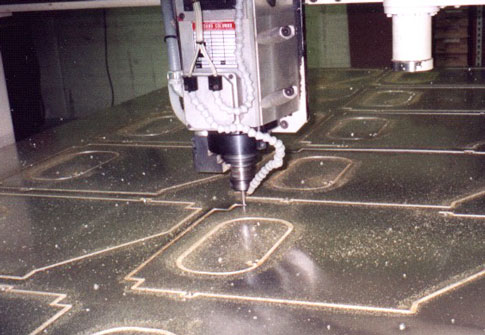
When it comes to tools, the saw is all about helping to reduce large materials to smaller, more useful pieces. At Mick Design, the majority of our sawing and cutting is actually done by robots. Using computer-guided controls, the employment of robots saves resources and contributes to our product consistency by making perfect cuts every time. While the robots are fantastic, a working knowledge of proper board-cutting techniques is critical to anyone involved in woodworking.

22" Crosscut Hand Saw
The classic carpenter is experienced and confident with the hand saw. There are two basic types of cuts when sawing a board: cutting with the grain & cutting across the grain. There are plenty of different types of hand-powered saws and two most common type are designed to handle these two basic cut types: the Rip Saw and the Crosscut Saw.

The rip saw is designed to cut along the grain of the wood. The teeth of the saw are sharpened to be perpendicular to the blade and behave like small chisels to shave away wood fibers throughout the cut. The teeth work effectively to maintain a straight cut by preventing the saw from following the winding grain lines. Think about chopping wood with an axe and the wood splintering down the grain lines; the rip saw works along the same plane, but produces a clean cut. Rip hand saws are much less common today, with heavy machines taking care of most rip cuts. 

The crosscut saw employs angled teeth that are sharpened like knife points in order to slice the wood fibers. This type of saw is designed to work perpendicular to the wood grain. The teeth of a crosscut saw are much finer, smaller in size and closer together compared to those of a rip saw. The power miter saw, a dedicated crosscut tool,  is the modern offspring of the classic handheld rip saw.

Rip-Cut Teeth
Crosscut Teeth

Thursday, 15 December 2011

A brief history.

The beginning of Mick Design.


It was the early 80's and denim was everywhere. Pants were worn high and hair was worn low. Shoulder pads were essential. Mick MacIsaac was a young man, working hard as a machinist. He learned the art of Vacuumforming at his job and quickly became confident using aluminium molds to create plastic displays.


Now shake it on baabay!


Skip ahead to the late 80's. Ferris Bueller was influencing youth everywhere, kids were rebelling against principals and Mick was restless. He decided to learn something new so he started spending time with bandsaws, wood lathes and sanders. He focused his energy on developing his woodworking skills, continuing to expand his knowledge.


Fast-forward to Y2K.  He continued to work with a commercial fixtures company, The nature of his work had shifted; CNC (computerized numerical control) software had the ability to cut materials with extreme precision using to computerized robots.  At this point, he decided to push his talents towards sales.  From cold calling from the Yellow Pages to knocking door-to-door, discouragement was not an option; he would prove himself to be the salesman who got the "impossible" clients.

Robots make perfect cuts

In 2005, Mick took a chance. He took out his savings, took out a loan, bought some equipment and started a business. He was confident in his skills with plastics, woodworking and metal. He was self-assured in the experience he had gained in design, organization and production. He had been working with displays since 1981 - at the very least, he was definitely an expert. He called it Mick Design Group. He didn't have a plan but he knew where he wanted to be.

Tired of paying someone else to do his drawings, Mick decided to go back to school and enrolled in a drafting program. His class taught 2D only but he could see in 3D on a 2D plane! He started using AutoCAD to do modelling and became familiarized with different design processes. He gained a good understanding of metals and how to use the drafting software for a variety of purposes. 


Nearly seven years later, he's still working hard, but now the business is his, and it's amazing to see all the work that's coming in...

Mick MacIsaac